
Enterprise automation · Multi-agent systems
Case StudiesArtificial Intelligence
AI-Powered Business Process Automation & Multi-Agent AI Systems
Intelligent AI agents, autonomous workflows & enterprise process orchestration
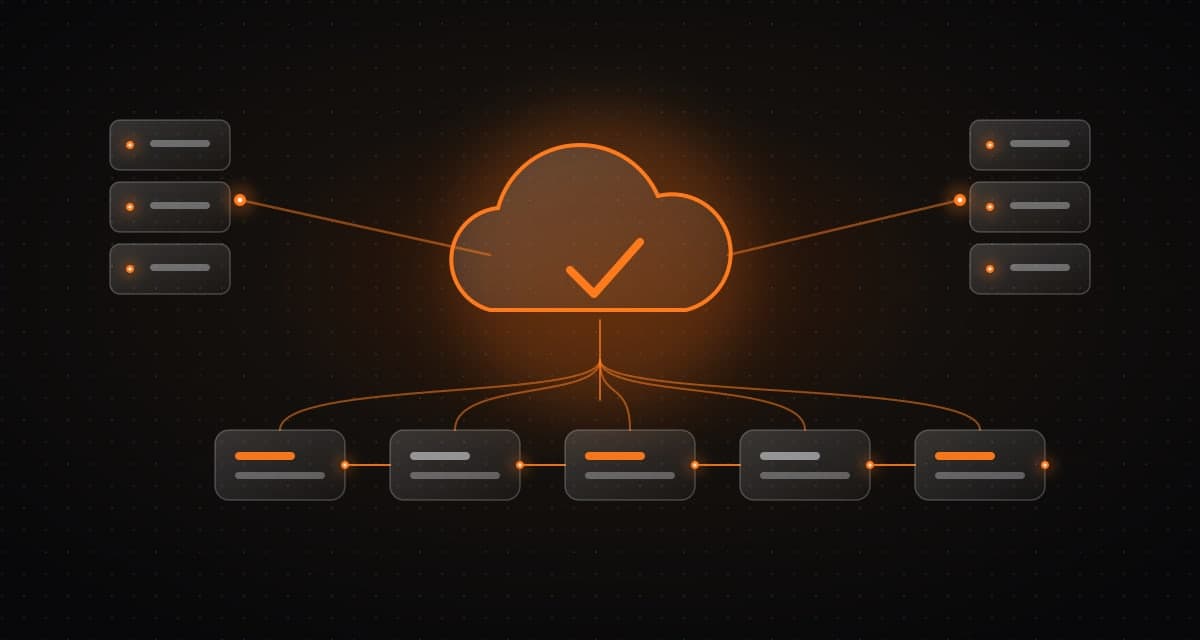
Specialised AI agents, central orchestration, enterprise integrations, and human approval for complex, cross-system business workflows.
Overview
From Repetitive Tasks to Orchestrated Digital Operations
Modern businesses run hundreds of recurring activities—customer communication, sales ops, documents, finance, procurement, reporting, and support—yet many processes still depend on manual coordination, repetitive entry, and disconnected apps. Traditional automation handles fixed steps; complex work needs contextual understanding, retrieval, and coordination. Bracket & Bit proposes an AI-powered Business Process Automation Platform combining specialised agents, enterprise integrations, workflow orchestration, and human approval. Proposed solution concept—not a verified client deployment.
The challenge
Complex Work Does Not Fit a Single Script
Repetitive manual work
Recurring admin and operational tasks consume employee time.
Disconnected applications
CRM, ERP, email, projects, and finance hold fragments of the same process.
Workflow bottlenecks
Manual approvals and cross-department coordination slow execution.
Information overload
Staff search documents, emails, and records to complete simple requests.
Limited automation flexibility
Fixed rules struggle when tasks need contextual interpretation.
Delayed follow-ups
Leads, customer requests, tasks, and approvals can be overlooked.
Operational scalability
Growth often adds coordination overhead instead of streamlined throughput.
Proposed approach
Orchestrated Specialists, Not One General Bot
Each agent has a defined responsibility, access scope, and approved tools—coordinated through a central orchestration layer.
Understand requests
Classify intent and required business outcome from incoming work items.
Proposed solution
Six Capabilities for Multi-Agent Automation
Intelligent agent orchestration
Central engine routes work across research, support, sales, documents, finance, HR, project, and analytics agents.
Enterprise knowledge intelligence
Search, RAG, and context-aware understanding over policies, contracts, products, and customer records.
Connected tool execution
Structured actions into CRM, ERP, ticketing, email, and calendars via scoped integrations.
Workflow orchestration
Long-running processes with branching, retries, timers, and exception queues.
Human-in-the-loop governance
Approval gates for financial, HR, legal, and external customer-facing operations.
Operations console
Live process status, agent telemetry, pending approvals, and audit-ready history.
Example agent roles
- Research Agent
- Customer Support Agent
- Sales Intelligence Agent
- Document Processing Agent
- Finance Operations Agent
- HR Operations Agent
- Project Management Agent
- Reporting & Analytics Agent
Reference architecture
Seven Layers From Apps to Operations Console
Enterprise applications
CRM, ERP, email, project management, finance, HR, and support systems—connected via approved interfaces.
Example workflow
Cross-System Customer Request Handling
Illustrates proposed multi-agent coordination—not a verified production deployment.
- 1
A customer request arrives via email and is ingested into the orchestration queue.
- 2
The orchestrator classifies intent and selects the support-and-sales workflow.
- 3
The research agent retrieves product and policy information from approved knowledge sources.
- 4
The document agent extracts relevant terms from an attached contract summary.
- 5
The support agent drafts a structured response with cited internal sources.
- 6
Business rules flag a pricing exception requiring manager review.
- 7
An authorised approver reviews the draft and approves the outbound message.
- 8
The sales agent updates the CRM opportunity stage and logs activity notes.
- 9
Notifications confirm completion to the requesting team.
- 10
The full agent trace and approvals are stored for audit and analytics.
Illustrative trace
Agent Handoffs With Approval Checkpoints
Example telemetry pattern—production systems must enforce scopes, retention, and access policies.
Orchestrator
Classified intent · selected workflow #support-pricing
Operations
Process & Agent Operations Dashboard
Role-based views for operations, team leads, compliance, and leadership.
- Active workflows and queue depth
- Agent utilisation and handoff latency
- Pending human approvals
- Failed tool calls and retries
- Knowledge retrieval coverage
- Process completion rates
- Department workload distribution
- Exception and escalation volume
Security, governance & responsible automation
Agents Assist—Humans Approve What Matters
- Per-agent RBAC, least-privilege tool access, MFA, and encryption in transit and at rest
- Tenant isolation, secure credential vaults, API auth, rate limiting, and retention policies
- Human approval required for high-impact actions; agents cannot bypass governance policies
- Full workflow and agent activity audit trails with separation of AI drafts from approved records
- Monitoring of tool calls, retrieval scope, and prompt-injection defenses on untrusted content
Technology
Proposed Technology Stack
Final stack depends on transaction volume, integration surface, compliance requirements, and existing enterprise systems.
Application
- Next.js
- React
- TypeScript
- Node.js
- Python
- FastAPI
Agents & workflow
- Orchestration runtime
- Tool calling
- BullMQ
- Redis
- State store
Knowledge & data
- PostgreSQL
- Vector / hybrid search
- Object storage
- RAG pipelines
Platform
- Docker
- Kubernetes
- Prometheus
- Grafana
- Audit logging
Expected value
Measure Impact in Pilot and Rollout
Throughput, error rates, approval load, and cost require implementation data—not claimed here.
- Less repetitive coordination and manual data entry across departments
- Faster handling of complex requests that span multiple systems
- Fewer missed follow-ups on leads, tickets, and pending approvals
- More consistent execution of documented policies and procedures
- Better visibility into process bottlenecks and agent-assisted workload
- Scalable digital operations without proportional admin headcount growth
Implementation
From Discovery to Monitored Agent Fleet
- 1
Process discovery
Map departments, systems, high-volume tasks, approval policies, and integration constraints.
- 2
Agent & tool design
Define agent roles, scopes, tool schemas, and orchestration patterns for priority workflows.
- 3
Integration foundation
Connect CRM, ERP, email, and repositories with governed credentials and test sandboxes.
- 4
Knowledge layer
Ingest approved documents and policies; retrieval with permission filters before model context.
- 5
Workflow & approvals
Implement orchestration, exception queues, and human-in-the-loop gates for sensitive steps.
- 6
Pilot, evaluate & scale
Measure accuracy, latency, and approval load; harden security; expand agents and processes with monitoring.
Related case studies


Intelligent Agents. Governed Orchestration. Connected Operations.
Discuss agent roles, enterprise integrations, and approval design for your highest-volume business processes.