

Artificial Intelligence · Enterprise Automation
Case StudiesArtificial Intelligence
Turn Business Knowledge Into Actionable Intelligence.
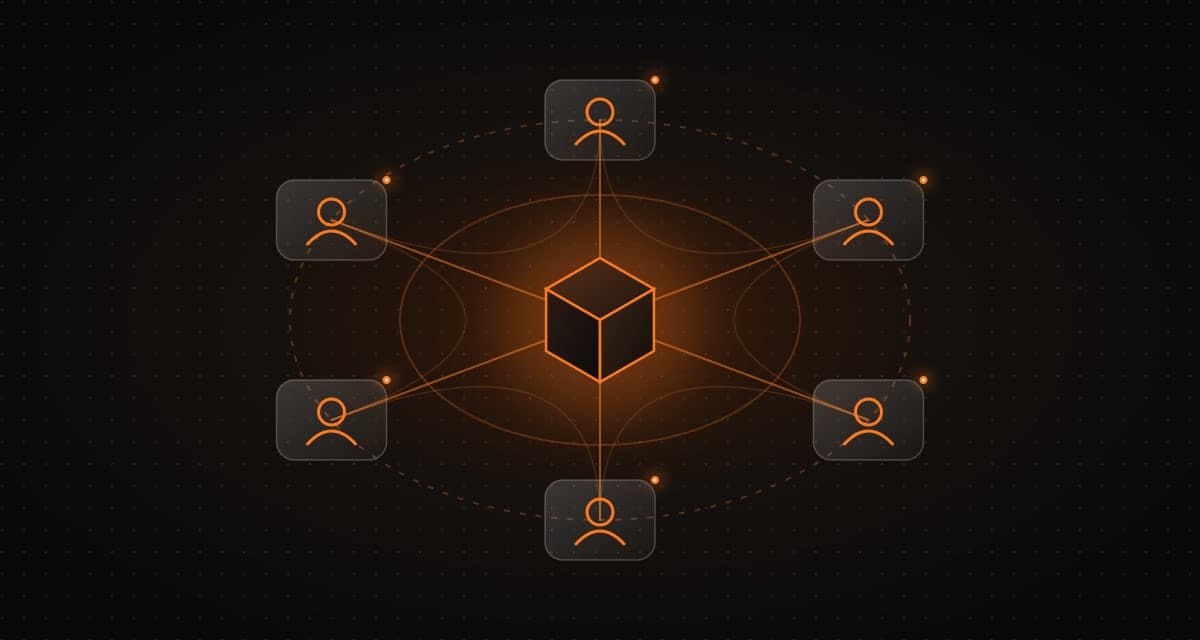
An AI-powered enterprise intelligence concept connecting business knowledge, document understanding, contextual answers, and intelligent workflows through one coherent platform.
Executive summary
Turning Business Knowledge Into Actionable Intelligence
Businesses generate enormous amounts of information through documents, knowledge bases, policies, contracts, reports, and operational systems—but having information does not mean employees can find or use it efficiently.
Bracket & Bit proposes an AI-powered Enterprise Intelligence Platform that combines document processing, retrieval-augmented generation, source citations, permission-aware retrieval, and workflow automation—connected to your actual information and processes, not a generic chatbot island.
This case study describes a proposed solution architecture. It is not a claim of a completed client deployment or measured business results.
Proposed solution
One Intelligent Interface. Connected Business Knowledge.
A unified interface for authorized employees to ask questions, discover information, and initiate selected workflows—grounded in retrieval, not unconstrained generation.
Enterprise Knowledge Assistant
Natural-language questions answered using approved organizational information.
Document Intelligence
Extract, classify, and summarize supported documents for search and workflows.
Source-Linked Answers
Responses reference the documents and passages used when evidence is available.
Workflow Assistance
Prepare summaries and next steps; consequential actions require permission and confirmation.
Business challenge
The Problem Isn't a Lack of Information. It's Access to It.
Organizations store answers in PDFs, portals, email, and folders. Employees need a coherent path from question to evidence—not another search box that ignores permissions.
Fragmented Knowledge
Information scattered across repositories without shared context.
Repetitive Questions
Teams re-answer questions already documented elsewhere.
Manual Document Processing
Copying, searching, and verifying content by hand.
Limited Traceability
Hard to trust answers without inspectable sources.
Information Security
Retrieval must respect permissions—not bypass them.
Conceptual illustration

How it works
From Documents to Grounded Answers
Select a stage to see how information moves from sources to a cited response. Sample UI only—not a live model connection.
Active stage · Connect Data Sources
Link approved repositories, uploads, and supported internal APIs.
Technical architecture
An Architecture Built Around Context, Control, and Traceability
User experience
Q&A, document library, citations, previews, feedback, admin dashboard.
Security and observability span every layer—permissions, logging, and evaluation are not bolted on after the fact.
Traceability
Answers Should Come With Evidence.
Illustrative example only—not verified policy and not connected to a live backend.
User question
What is our standard process for onboarding a new employee?
Employee Onboarding Policy.pdf
…complete required documentation…
IT Access Procedure.pdf
…complete required documentation…
HR Operations Guide.pdf
…complete required documentation…
Capabilities
More Than a Chatbot
AI Knowledge Assistant
AI knowledge assistant with natural-language search
Document Intelligence
Document intelligence—extraction, classification, and summarization
Retrieval-Augmented Generation
Retrieval-augmented generation grounded in approved sources
Workflow Automation
Workflow automation with permissioned follow-up actions
Enterprise Integrations
Enterprise integrations via approved APIs and repositories
Administration & Analytics
Administration and analytics for processing and system health
Security & responsible AI
Intelligence Must Never Come at the Expense of Trust.
Safeguards reduce risk but do not guarantee perfect security or accuracy.
- 1
Permission-aware retrieval before content reaches the model
- 2
Tenant isolation for multi-customer deployments
- 3
Source attribution tied to retrieved material
- 4
Prompt-injection defenses—retrieved content treated as untrusted
- 5
Sensitive data protection via encryption, access, and retention policies
- 6
Human approval for consequential business actions
- 7
Evaluation and monitoring of retrieval, grounding, and access control
Technology
Choosing the Right Technology for the Use Case
Candidate technologies only—the final stack depends on requirements, infrastructure, sensitivity, and deployment constraints.
Frontend
- Next.js
- React
- TypeScript
- Tailwind CSS
Backend & AI
- Python / FastAPI
- Node.js / Express
- RAG orchestration
- Embeddings & LLMs
Search & data
- PostgreSQL
- Vector / hybrid search
- Object storage
- Document parsers
Infrastructure
- Cloud deployment
- Containers
- CI/CD
- Monitoring
Expected value
Designed for More Useful, Verifiable Business Intelligence
Intended benefits of the proposed architecture—not measured client results.
Faster Knowledge Discovery
Faster knowledge discovery across approved sources
Reduced Repetitive Work
Reduced repetitive document and retrieval work
More Verifiable Answers
More verifiable answers with source references
Improved Operational Visibility
Improved operational visibility into processing and usage
Implementation
From Proof of Concept to Production Readiness
- 1
Discovery
Identify users, problems, data sources, access requirements, and success criteria.
- 2
Proof of concept
Build a small retrieval pipeline on approved sample documents; validate relevance and citations.
- 3
Platform development
Develop UI, APIs, document pipeline, search infrastructure, and orchestration.
- 4
Security and evaluation
Test access restrictions, retrieval quality, injection defenses, and failure scenarios.
- 5
Pilot deployment
Limited authorized users; feedback against defined baseline measurements.
- 6
Production readiness
Reliability, monitoring, operations, scaling, support, and governance before broad access.
Related case studies

Let's Engineer AI Around Your Business.
Tell us where your business loses time searching for information or handling repetitive work. We'll help you evaluate the right AI architecture and implementation approach.